We co-host 4 lodges in Mabalingwe on Airbnb. Here’s what killed bookings, and how we got them back.

We listed four luxury lodges in Bela-Bela on Airbnb. Within the first week, bookings came in faster than any property I’ve managed on the KZN North Coast. Guests were locking in weekends, long weekends, school holiday slots – the kind of dates that carry a listing’s entire season.
Then the owner made one change to the pricing. And everything stopped.
What followed is a case study in how Airbnb’s algorithm works, how quickly pricing decisions compound, and what it actually takes to rebuild momentum once you’ve broken it.
The First Week
Mabalingwe is a bush reserve in Bela-Bela, Limpopo. It’s not a secret; families who know Mabalingwe, love it. But it’s also a competitive Airbnb market with over 545 properties listed in Bela-Bela, and when we launched the four lodges, we priced strategically: visible in the search results, competitive without being the cheapest option in the reserve.
The algorithm rewarded it. Airbnb’s early momentum system, which prioritises new listings that convert well, started pushing the lodges up in search rankings. Inquiry notifications were going off regularly. Bookings were confirmed. The calendar was filling up, specifically with the dates guests actually want: Friday check-ins, long weekends, the upcoming school holiday blocks.
From an operator’s perspective, it was working exactly as it should.
Need an Airbnb co-host?
Contact StayHere for help with co-hosting your property on Airbnb in Bela-Bela.
The moment everything changed
The owner looked at the incoming bookings and made a reasonable call. Demand was clearly there. The lodges were filling up. So they adjusted the nightly rates upward – not dramatically, but enough to sit above the sweet spot we’d set at launch.
It made sense from one angle: if guests are booking this fast, maybe we’ve underpriced it.
What happened next was immediate. Inquiries dropped off. Then stopped almost entirely.
It wasn’t just the price – It was what was left
Here’s where it gets more specific, because the pricing change was only half the problem.
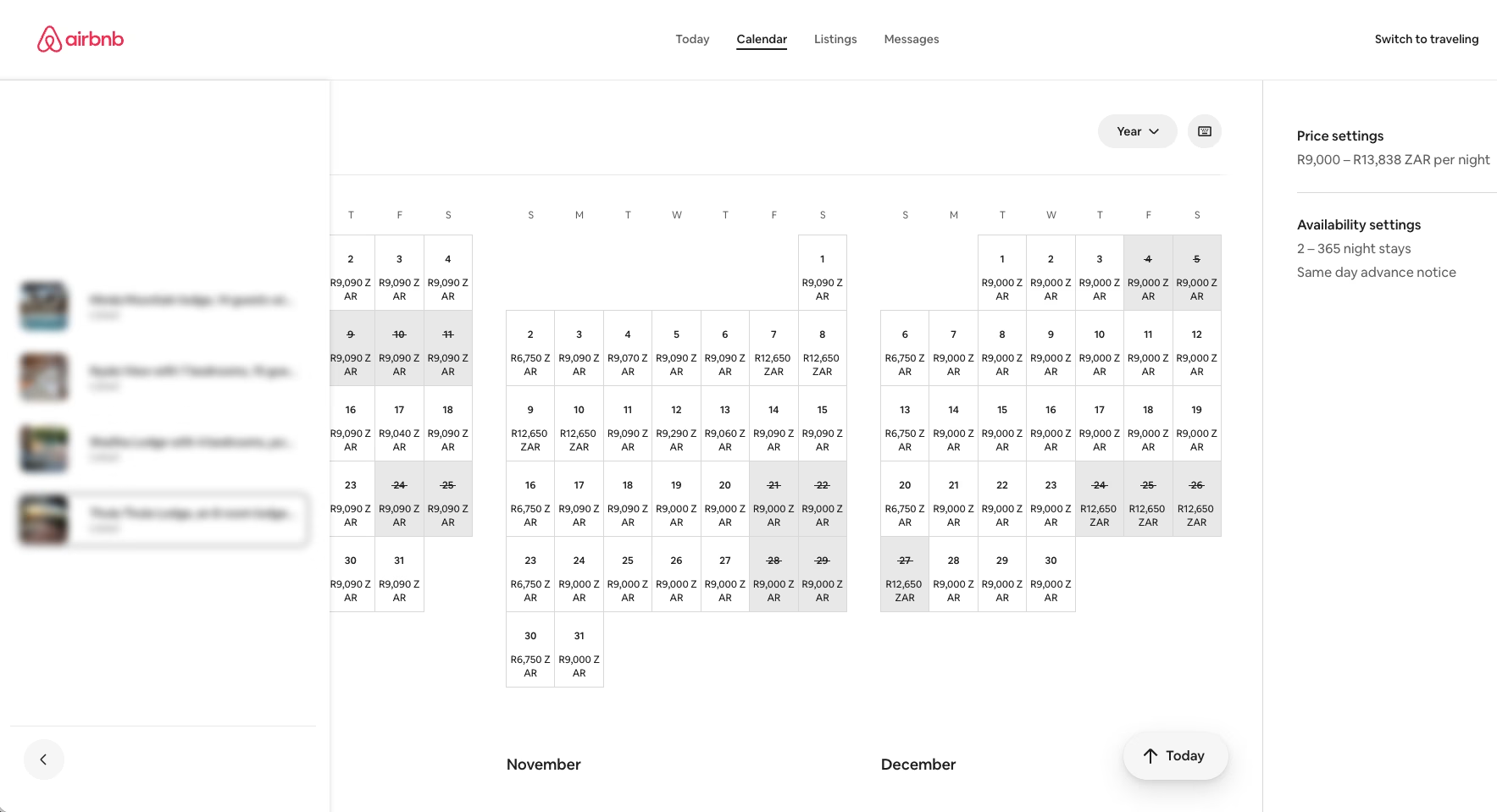
When the rates went up, the calendar didn’t reset. The best dates – the weekends, the long weekends, the first week of the school holidays – were already gone. Locked in at the original price by the guests who moved fast.
What remained available were the midweek gaps. The quieter stretches between the booked-out dates that guests tend to skip over unless the price is genuinely attractive.
So the owner had effectively raised the price on the least desirable inventory in the calendar.
A guest browsing Mabalingwe lodges in that price range would open our listings, see limited availability on awkward dates, and move on to a competitor whose calendar was more open and whose pricing hadn’t shifted.
Airbnb’s search filters compound this. Most guests search within a price band. The moment you cross that threshold, even marginally, you disappear from a significant portion of search results entirely. The lodges went from appearing in front of the right guests to not appearing at all.
What the algorithm saw
Airbnb’s ranking system rewards momentum. Early bookings, high click-through rates, fast response times – these signals push a listing up. When bookings slow down, the algorithm interprets it as reduced guest interest and adjusts ranking accordingly.
Breaking that momentum is expensive. You don’t just lose the bookings you didn’t get. You lose the ranking position that was producing the bookings in the first place. Rebuilding it takes time – and in a seasonal market like Mabalingwe, time costs you specific dates you can’t recover.
The Fix
Once we unpacked exactly what had happened to the calendar, the path forward was clear: revert to the original pricing.
Not a discount. Not a promotion. Just back to the rate that had been converting, applied to the remaining availability.
The owner made the call quickly, which matters. The longer a listing sits with low conversion on uncompetitive pricing, the deeper the algorithm buries it. Getting back in range fast gives the platform less time to reassign that ranking to a competitor.
The Recovery
Within days of reverting, inquiries started coming through again. Midweek gaps that had been sitting untouched began converting. The algorithm, seeing renewed engagement, started surfacing the listings again in relevant searches.
The high-value dates that were booked in the first week are still gone – those guests locked them in at the original price and that’s fine, that’s the system working as intended. But the remaining calendar is moving, the reviews from early guests are strong, and the long-term outlook for these lodges is back on track.
Mabalingwe has genuine, repeat demand. The properties are quality. The audience is there. None of that changed because of a pricing misstep – but accessing that audience again required getting the price back into the range they’re actually searching in.
The lesson for property owners
Seeing early demand and wanting to capture more of it is an understandable instinct. But on Airbnb, the launch window is the one moment you have the algorithm’s full attention. That’s the time to convert, not to optimise margin.
If you do make a pricing change and bookings stall, the diagnosis matters more than the instinct to keep pushing. Ask what dates are still available, who is actually searching in your price band, and whether the rate you’re now showing is competitive for the inventory you’re selling.
In this case, the answer was clear. The fix was simple. And the bookings followed.
What comes next
We’re working through it. Some of the midweek availability has started converting again, and the long-term trajectory for these lodges is still strong. Mabalingwe has real demand, the lodges are quality properties, and the reviews coming in from the early bookings are solid.
But it’s a good illustration of how quickly a single pricing call can interrupt a listing’s momentum — and how the consequences aren’t always obvious until you unpack what actually happened to the calendar.
If you own a property in a bush reserve, a coastal estate, or anywhere that runs on seasonal demand cycles, the window between launch and peak season is the most important stretch you’ll manage. Don’t change the price until you understand exactly what dates you’re pricing and exactly who’s still looking at them.
StayHere manages short-term rental properties across South Africa. If you own a property in a bush reserve, a coastal estate, or anywhere that runs on seasonal demand cycles and want to understand how your listing is performing – or why it isn’t – claim your free listing audit.
Get a Free Listing Audit